
A chimney cleaning quote can look confusing when one homeowner gets a basic price and another receives a much higher estimate. The difference usually comes down to the chimney’s condition, accessibility, buildup, and what the service actually includes.
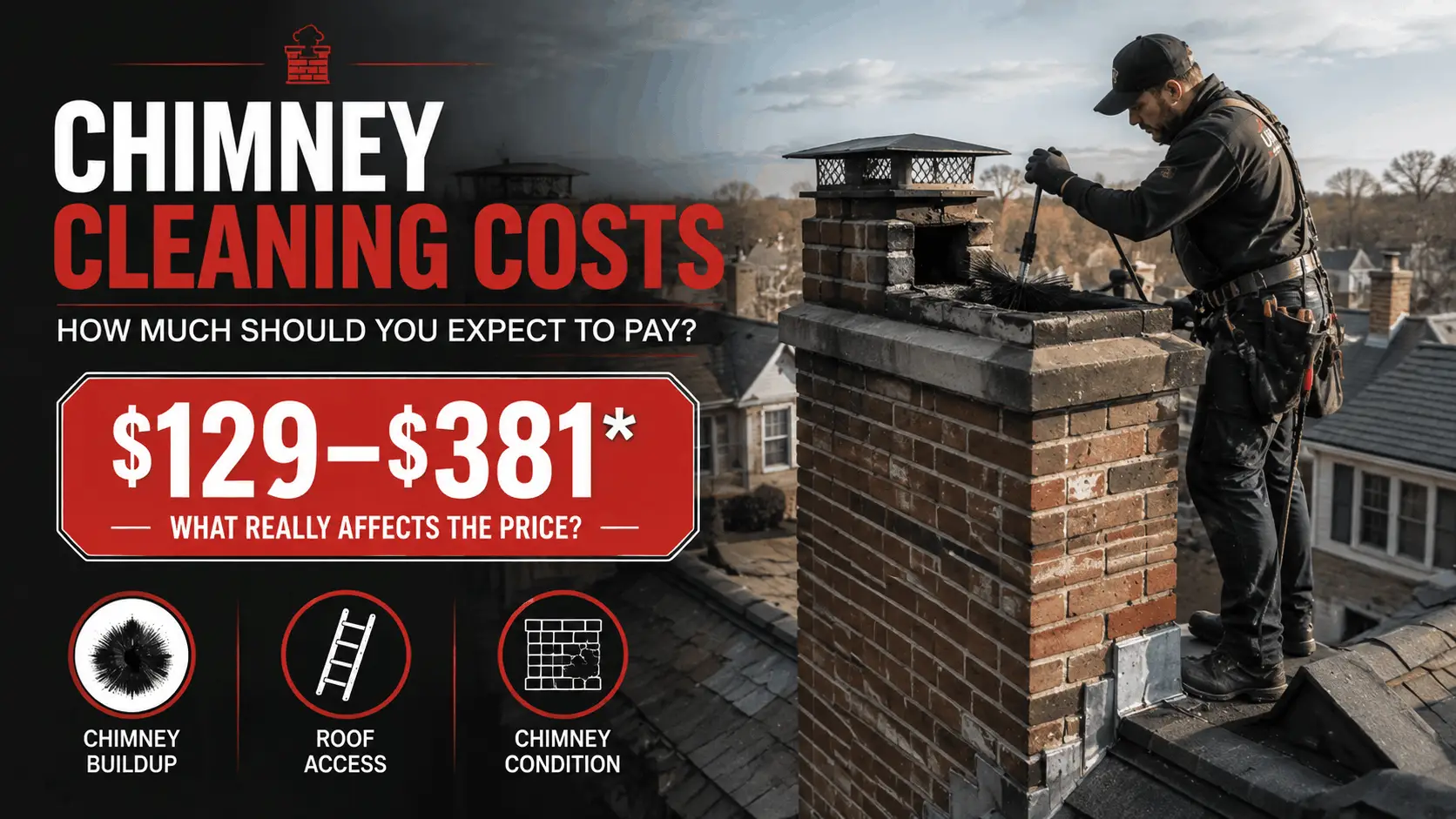
For homeowners researching chimney cleaning costs, knowing what affects the price is more useful than relying on one flat number. Current national cost data puts professional chimney sweeping at roughly $129 to $381, with an average of about $254.
Local pricing can differ, so the goal is to understand what you are paying for and what questions to ask before scheduling service.
What Is the Average Cost to Clean a Chimney?
Professional chimney cleaning commonly costs about $129 to $381 nationally, with an average near $254 based on current 2026 cost data. Your actual price may be lower or higher depending on the chimney and service required.
Think of that range as a national benchmark, not a guaranteed local price. A straightforward chimney with normal buildup and easy access is generally simpler to service than one with heavy creosote, multiple flues, difficult roof access, or other complications.
| Chimney Cleaning Situation | What Can Affect the Price |
|---|---|
| Routine cleaning | Normal soot and creosote buildup |
| Heavier buildup | More time and specialized cleaning |
| Difficult access | Roof height, pitch, or limited access |
| Multiple flues | Additional cleaning and inspection work |
| Cleaning plus inspection | Broader evaluation of the chimney system |
For homeowners in Farmers Branch, Dallas, Fort Worth, or Plano, the most reliable way to determine your cost to clean chimney is to have the actual system evaluated rather than choosing a provider solely by a national average.
The average gives you a useful starting point, but the chimney itself determines the final scope of work.
What Factors Can Increase Your Chimney Cleaning Cost?
The biggest factors affecting chimney cleaning costs include buildup, accessibility, chimney condition, number of flues, fireplace type, and how long it has been since the last service. These factors change the amount of work and equipment a professional may need.
A professional usually considers several details before giving a final recommendation:
- Creosote and soot buildup: Heavy or hardened deposits can require more thorough cleaning.
- Chimney accessibility: Steep or difficult roofs can increase labor and safety requirements.
- Number of flues: More than one flue means additional areas may need attention.
- Chimney condition: Cracks, deterioration, damaged components, or other concerns may require further evaluation.
- Fireplace and chimney type: Different systems can require different cleaning methods.
- Cleaning history: A chimney that has gone several seasons without service may need more attention than one maintained regularly.
The condition of the chimney matters because cleaning is not simply about running a brush through the flue. A professional needs to determine what type of deposits are present and whether anything is obstructing or affecting the venting system.
Understanding these cost factors makes it much easier to judge whether a quote reflects the work your chimney actually needs.
What Does Professional Chimney Cleaning Usually Include?
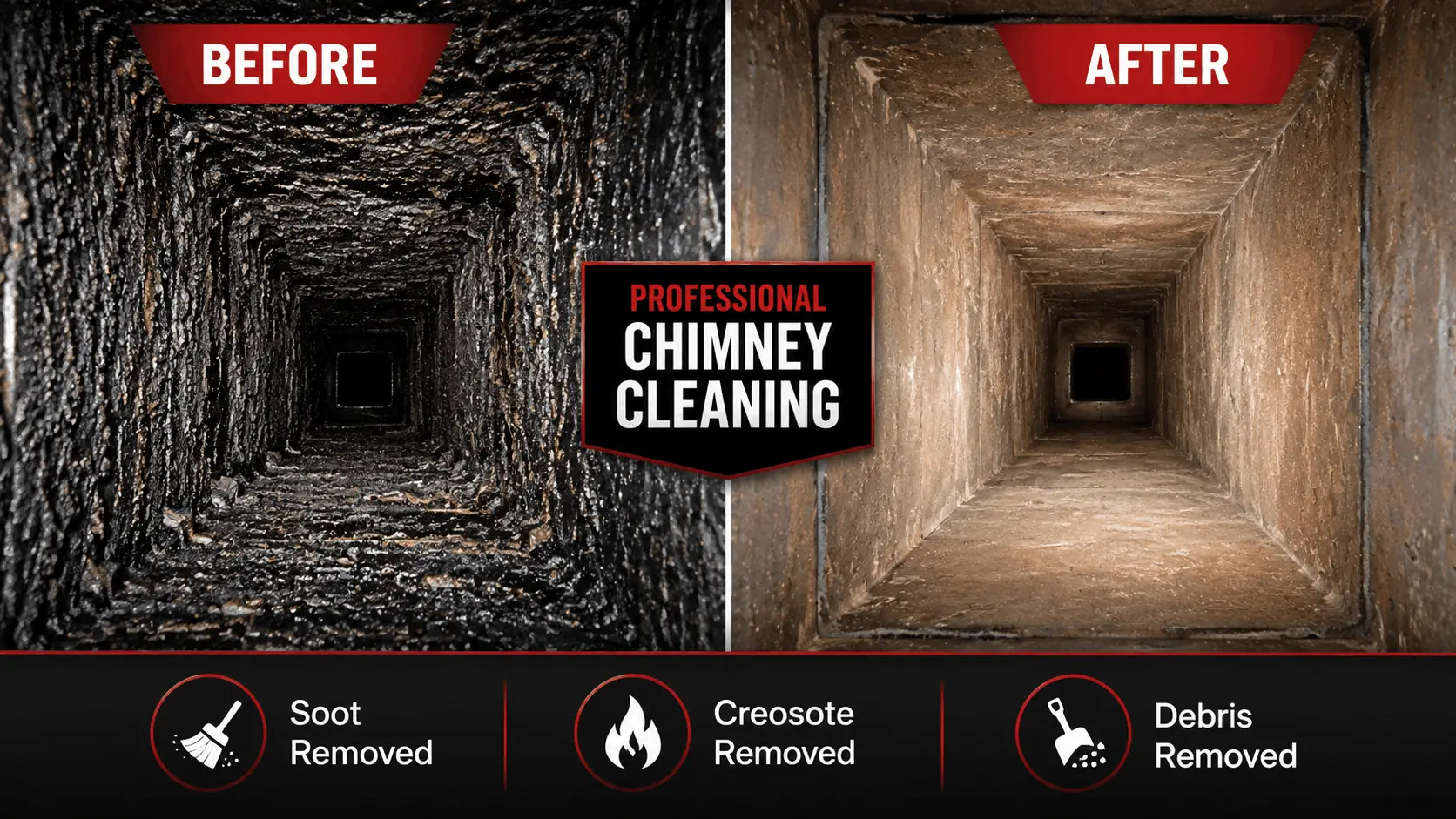
Professional chimney cleaning should involve more than brushing the visible area around the fireplace; a complete sweeping addresses the chimney flue and smoke chamber and removes accumulated deposits.
A typical professional service may include:
- Assessing the accessible portions of the chimney and fireplace.
- Protecting the surrounding interior area from soot and debris.
- Cleaning the chimney flue and relevant interior components.
- Removing soot, creosote, and loose debris.
- Checking for visible signs of blockage or deterioration.
- Cleaning the fireplace area as appropriate.
- Discussing any concerns discovered during the service.
The exact scope depends on the chimney system and its condition. For example, hard or glazed creosote may require more specialized cleaning than ordinary soot deposits.
If you are comparing professional chimney cleaning cost, ask whether the quoted service covers the actual flue and smoke chamber rather than only the visible fireplace opening.
A fair cleaning quote should clearly describe the work being performed, not just give you a number.
When Can Chimney Cleaning Lead to Additional Costs?
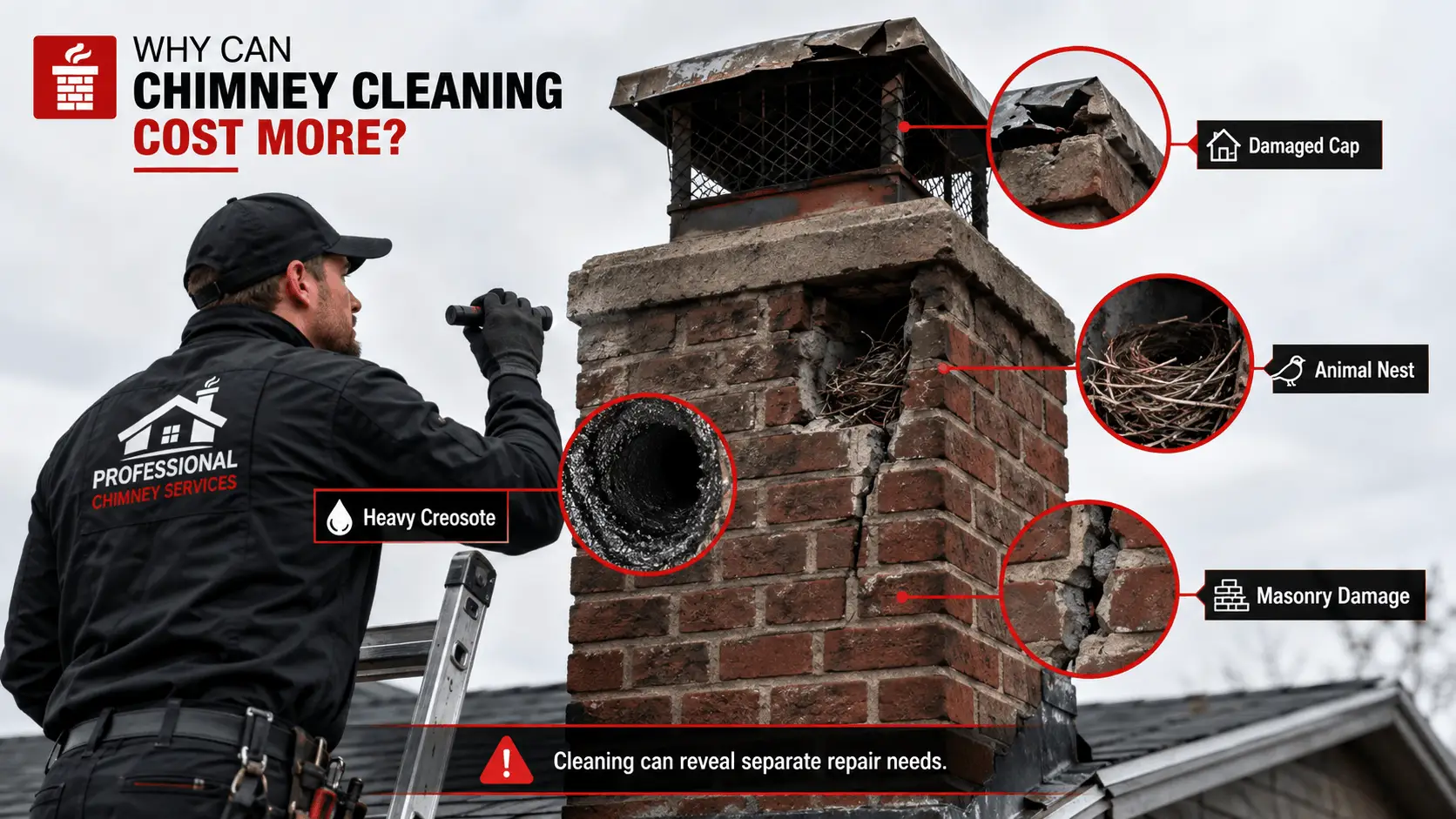
Additional costs can arise when cleaning reveals heavy deposits, blockages, damaged components, animal nests, or other chimney problems that require separate work. Cleaning itself does not automatically mean that repairs are needed.
During a professional service, a chimney sweep may discover conditions such as:
- Heavy or hardened creosote buildup
- Animal nests or other obstructions
- Damaged chimney caps
- Liner concerns
- Deteriorated masonry
- Flashing problems
- Ventilation issues
These findings are important because cleaning and repair are different services. A sweep should explain what was found, why it matters, and whether the issue needs immediate attention or can be addressed later.
For example, if a damaged cap allows water or animals into the chimney, the appropriate solution may involve chimney cap installation rather than simply cleaning the flue again. Likewise, visible masonry deterioration may call for chimney repair services.
A professional may also recommend a chimney inspection when the condition of the system warrants a closer evaluation.
Unexpected findings can change the total cost, but they should be explained clearly before separate repair work is performed.
How Can You Tell if a Chimney Cleaning Quote Is Fair?
A fair chimney cleaning quote should clearly explain the service, identify possible additional charges, and match the condition and accessibility of your chimney. The lowest quote is not automatically the best value.
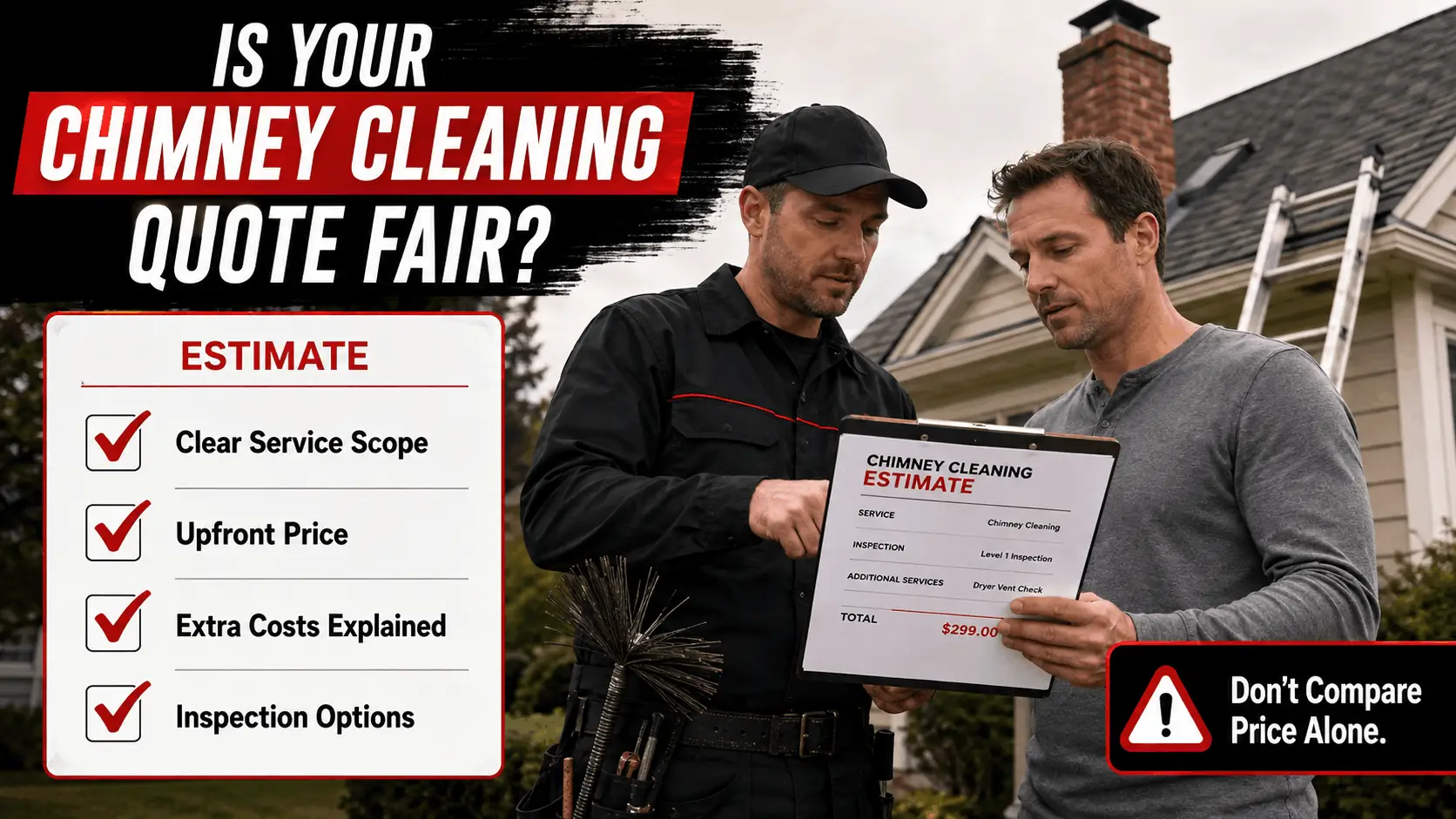
Before approving work, ask:
- What exactly does the cleaning include?
- Is the chimney flue being cleaned, or only the fireplace area?
- Is an inspection included?
- Could heavy buildup or difficult access change the price?
- Will you be contacted before additional work is performed?
- Can the provider explain any recommended repairs?
Comparing professional chimney cleaning quotes based on scope is more useful than comparing two numbers with completely different services behind them.
You should also be cautious when a quote is unusually vague. A professional should be able to explain what they observed and what they intend to clean without pressuring you into unrelated work.
For homeowners looking for chimney cleaning in Farmers Branch, choosing a provider that clearly explains the service can help avoid unpleasant surprises.
The best quote is one you understand before the work begins, not simply the cheapest number on the page.
Is Professional Chimney Cleaning Worth the Cost?
Professional chimney cleaning can be worth the cost because it removes accumulated deposits and gives a trained professional an opportunity to identify problems affecting the chimney system.
Creosote and other deposits can interfere with proper venting and contribute to chimney fire hazards. Regular inspections can also help identify hidden problems before they become more serious.
Professional service is particularly useful when:
- You use a wood-burning fireplace regularly.
- You are unsure when the chimney was last cleaned.
- You notice unusual odors or visible buildup.
- You suspect an obstruction.
- You want the chimney evaluated before using the fireplace again.
Routine maintenance can also help you identify issues early instead of discovering a chimney problem after it has caused additional damage.
Paying for proper maintenance is easier to justify when you know the service addresses both buildup and the condition of the chimney system.

When Should You Schedule Your Next Chimney Cleaning?
You should have your chimney inspected at least annually and cleaned when necessary based on deposits, use, and the condition of the system. Cleaning frequency is not identical for every fireplace.
Industry guidance recommends annual chimney inspections, with cleaning and maintenance performed when needed. Factors such as fireplace use, fuel type, installation, and burning habits can influence when cleaning becomes necessary.
Scheduling before the fireplace is heavily used can also make maintenance easier to plan. If you are already considering service, you can ask about annual chimney cleaning and whether your chimney needs cleaning, inspection, or both.
For homeowners who need local service, professional chimney sweeping can provide a more thorough assessment than trying to judge the chimney from the fireplace opening alone.
The right cleaning schedule depends on the condition and use of your chimney, so annual inspection is a practical starting point.
Frequently Asked Questions
Does chimney cleaning cost more for an older chimney?
An older chimney can cost more to service when its condition makes cleaning more difficult or reveals additional maintenance needs. Age alone does not determine the price. A professional should evaluate buildup, accessibility, chimney components, and visible deterioration before recommending additional work. This helps separate normal cleaning costs from repairs that require separate attention.
Does the type of fireplace affect cleaning costs?
Yes, the fireplace and venting system can affect the cost of professional chimney cleaning. Different systems produce different deposits and may require different cleaning approaches. The number of flues, chimney configuration, accessibility, and condition also matter, so the appliance type is only one part of the overall pricing decision.
Should I get a chimney inspection at the same time as cleaning?
A chimney inspection can be useful when you are having the system cleaned, especially if its condition or maintenance history is uncertain. Industry guidance recommends annual inspection, with cleaning and repairs performed when necessary. Ask the professional what level of inspection is appropriate for your situation and what the service includes.
Can a chimney sweep give an exact price before seeing the chimney?
A chimney sweep may provide an initial estimate, but an exact price can be difficult when the chimney’s condition and accessibility have not been evaluated. Buildup, roof access, multiple flues, blockages, or needed repairs can change the scope. A clear provider should explain what could change the quoted price before work begins.
Does chimney cleaning remove creosote completely?
Professional chimney cleaning removes accumulated soot and creosote deposits from the areas being serviced, but the required method depends on the type and severity of buildup. Hard or glazed deposits can require specialized mechanical cleaning. Regular inspection and appropriate cleaning help prevent deposits from reaching a more serious condition.
Should I schedule chimney cleaning before fireplace season?
Scheduling before heavy fireplace use can give you time to address cleaning or maintenance needs before you rely on the system. The best timing varies by household and chimney condition, but annual inspection and cleaning when necessary provide a practical maintenance approach. Planning ahead can also make it easier to address discovered problems.
Conclusion
Chimney cleaning costs are influenced by much more than the size of a cleaning company’s standard service fee. Buildup, accessibility, chimney condition, fireplace type, number of flues, and additional inspection or maintenance needs can all affect the final price.
For homeowners in Farmers Branch, Dallas, Fort Worth, and Plano, the smartest approach is to compare the scope of service, not just the quoted number. Ask what the cleaning includes, what could change the price, and whether the professional found any separate maintenance concerns.
If your chimney is due for service, chimney cleaning in Farmers Branch can help you determine what your system actually needs and what the appropriate next step should be.